

The tradition of commissioning music is a centuries old practice to create art both personal and performative. Of course, in the modern day, this practice is much less formal and difficult than it used to be (as well as more fair for the composer!). Thanks to technology, interested people or groups from any parts of the world can help create works with a composer through collaboration.
When I compose, it’s not just for myself- I deliver thoughtful and emotional experiences to audiences and commissioners alike. There’s as much meaning in my ideas or what I want to say as anyone who would commission for their ideas! While composing can sometimes be a solo act, the connections made through commissioning (with musicians and non-musicians alike) helps me stay motivated and connected.
In terms of how the actual process goes, the depth and length of discussion and collaboration can be as little or as much as the commissioner desires. Sometimes, I’m told to write anything I want for a particular ensemble, and sometimes there’s specific text, duration, or style that the commissioner wants. Both of these scenarios are well and good, but somewhere in between, where discussions and ideas can mix, allows the best chance of creating something totally unique and greater than ourselves.
If any of this sounds inspiring, reach out to me! From creating brand new music or dusting off old ideas of mine that have yet to bear fruit, anything is possible. Anyone looking to commission new music should not be intimidated – it’s not nearly as difficult or complicated as it may seem! A request for a commission can come from anyone who enjoys art and feels motivated to bring it to life. People commission music not just for performances, but for many occasions like weddings, anniversaries, short form content, promotional material, recitals, and more!
The Process:
Step One – Inspiration
What composers or artists do you like? What has your group already performed, if anything? Are you thinking about specific instruments or voices already? If so, find somebody who has written a lot for that specific instrumentation: they know what works and what doesn’t. Even a light sketch of ideas or list of references helps the composer understand style, voice, and mood, among other things.
Step Two – Discussion
It’s easier to generate ideas or text when there are a couple guidelines from the commissioner, and this is likely true for a majority of composers. However, if all you have is genuine interest and the desire for new music, don’t worry! Most composers have a backlog of ideas they’d like to try – we can help each other with the inspiration.
If you’re worried about how complex or difficult your inspirations may seem, don’t worry! Remember, you can set the level of difficulty for the piece. If it’s important to you, the instrumentation/voicing, duration, and difficulty can all be topics of discussion. Composers should tailor the piece to the ensemble, but may also have their own style. What is their particular style, if any? Have they written for your ensemble or project style before? When is the deadline? Are they working on a lot of other projects at the moment?
Don’t be afraid to at least talk about commissioning with a composer. Many ideas may not bear fruit, but that isn’t a reason to not plant trees. Conversations you have might flesh out your own ideas, or make the project become clearer. Maybe the price may be outside of your range, or you and the composer may disagree about the scope of a project, but you’ve still spent time well by hearing from the composer’s perspective.
Step Three – Cost
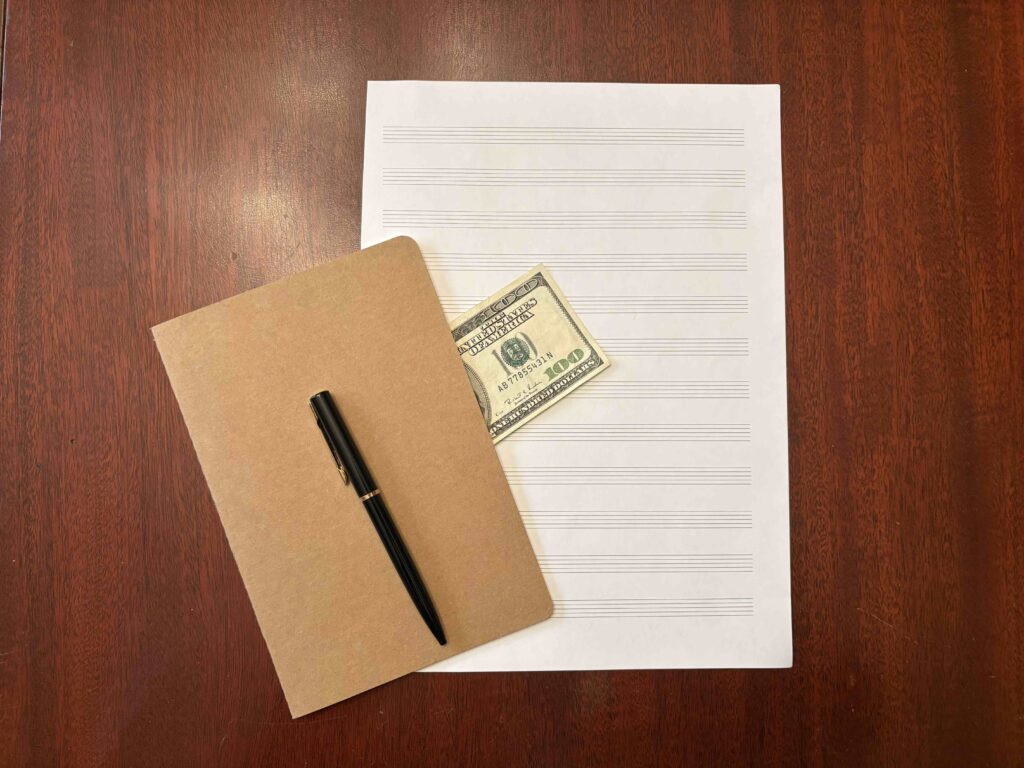
Cost typically varies between composers, but also depends on various factors. From the actual content (duration, complexity and instrumentation) to its use (personal, performance, film/game, etc.) to studio size (Indie, mid, AAA) as well as the deadline can have an effect on the cost. I’d recommend looking at this article (for typical rates of music composed for dynamic media) or this site and this site (for a measurement of costs for new music per hour of work), as well as searching reputable online resources in general. Depending on its use, the new work can often be billed by minutes of final product or length of production, whichever fits better for the project. And don’t worry, the initial discussion time of the topic doesn’t count to the total.
You can also contact someone you know has commissioned the composer in the past. Ask how it went. You might gain some valuable information!
Have any other questions about the process? Don’t hesitate to reach out!